
Phase 4: Requirements Analysis Custom Single Release Project
The requirements need to be verified by both business analysts and stakeholders so they are confined as valid for further use and contain relevant information. The requirement and design specification should be clear and easy to understand and their model should follow established formal standards and represent the real situation in the organisation. Once the business analyst gathers all of the necessary information through elicitation efforts, the business analysts can start their work on requirements analysis and design definition. The analysed, structured, and stakeholder-verified requirements lay a foundation for design definition and ultimately developing a solution that will bring value to the organisation. A business plan or project requires a variety of requirements to help define goals and establish a scope for the work that will be undertaken.
It is up to the project team to elicit these needs and requirements and to resolve conflicts, inconsistencies, and other issues. The results will be an integrated set of needs from which the product requirements will be transformed. The resulting product requirements represent what the product must do in order for the needs to meet the stated needs. If you make changes to this requirement analysis document during the project, record it through a change control procedure and submit it again for approval from the relevant stakeholders.
Step 3: Categorize Requirements
Business Process Model and Notation is used to create graphs that simplify the understanding of the business process. It is a popular technique used by business analysts to coordinate the sequence of messages between different participants in a related set of activities. In any organization, every new product or service is created in response to a business need. However, https://globalcloudteam.com/ despite spending tremendous time and resources on development, there can be a mismatch between the required product and the final product. Hence, there is a need for a focused and detailed requirements analysis in the early stages of any project to avoid major problems in the future. Flowcharts are a common way to illustrate the sequence of business processes.
EHRA takes issue with HTI-1’s burdens, competing requirements – Healthcare IT News
EHRA takes issue with HTI-1’s burdens, competing requirements.
Posted: Fri, 19 May 2023 10:42:23 GMT [source]
That is why businesses need to have the tools to identify and sort those requirements that bring highest value to the market. Moreover, you should be quick in analyzing the requirements if you are to develop and deploy a product within a reasonable timeframe to be competitive. During requirements gathering, the planned features of the application, the functional and non-functional requirements, and the details about the implementation of the project must be fully captured. Has any of your clients ever complained that what you delivered him isn’t what he exactly ordered? Have you faced trouble with conflicting requirements from multiple customers? A focused and comprehensive business requirements analysis can help you get rid of bottlenecks such as these.
Resources created by teachers for teachers
Gap analysis is also great method for understanding business requirements. As noted, it can help determine the difference between where a business is and where it wants to be. The result may initiate a series of user requirements to help the business close that gap. BPMN is based on a flowchart technique like activity diagrams from Unified Modeling Language .

Requirements analysis involves defining, analyzing, validating, and aligning stakeholders’ expectations for new projects while considering all possible conflicts. A natural inclination towards writing code can lead to implementation beginning before the requirements analysis is complete, potentially resulting in code changes to meet actual requirements once they are known. This may lead to the situation where user requirements keep changing even when system or product development has been started. Use cases are deceptively simple tools for describing the behavior of software or systems. A use case contains a textual description of the ways in which users are intended to work with the software or system.
When is a requirements analysis carried out?
Business process modeling notation helps visually document the elements of a business process. The team maps out the current state as a baseline and determines the future desired state. By viewing the business process, businesses can make improvement decisions. In this article, you’ll find expert tips for performing requirement analysis, a requirement analysis template with guiding data, and a practical approach to understanding requirement analysis techniques. This step typically includes graphical representations of the functions, data entities, external entities, and their relationships.

The criteria and attributes presented above enable us to rationalize the process of defining priorities and choosing requirements to take into account. RAD is helpful in supporting communication as it is easy to read and present a detailed view of the process and permitting activities in parallel. For instance, if there is a need to show more detail within a particular process, the process is decomposed into a number of smaller processes in a lower level DFD. In this way, the Content Diagram or Context-Level DFD is labeled a “Level-0 DFD” while the next level of decomposition is labeled a “Level-1 DFD”, the next is labeled a “Level-2 DFD”, and so on.
Requirements analysis process
Business requirements include the business objectives expected from the final software product. Software requirements describe the solution’s main functions to meet the business objectives. PMBOK, fourth edition, section 5.1.2, has additional information regarding tools and techniques for requirements analysis. During requirements elicitation, the Planning Team should note all assumptions and constraints that will affect development and operation of the system. Requirements should also be prioritized based on relative importance and by when they are needed.
- They want to verify that there are no contradictions and all requirements align with the goal of the project.
- An accurate and comprehensive requirement analysis also increases the chances of project success.duct or project in the workplace is created in response to a specific business requirement.
- Accountable – Describes roles that own the quality of the deliverable and sign off on work that Responsible provides.
- Logical Entity Relationship Diagrams are a type of data model that is used to depict the relationships between entities in a system.
- Perform a detailed analysis of the product based on the requirements gathered to determine its reliability and to identify any major problems.
At this point, teams review the resulting integrated set of needs and stakeholder requirements and transforms them into a set of requirements for the product to which the product will be designed and built. It is important that the resulting requirements are high-quality requirementshaving the characteristics of well-formed requirements. It’s wise to make sure that all team members knowhow to write good requirements. The project team derives an integrated set of stakeholder needs and requirements that represent the stakeholders’ expectations, goals, objectives, drivers, and constraints for the product.
Role Activity Diagrams- (RAD)
A popular form of prototype is a mockup, which helps future users and other stakeholders to get an idea of what the system will look like. Prototypes make it easier to make design decisions, because aspects of the application can be seen and shared before the application is built. Major improvements in communication between users and developers were often seen with the introduction of prototypes. Early views of applications led to fewer changes later and hence reduced overall costs considerably. Arrange a meeting with key stakeholders and resolve conflicting requirements.
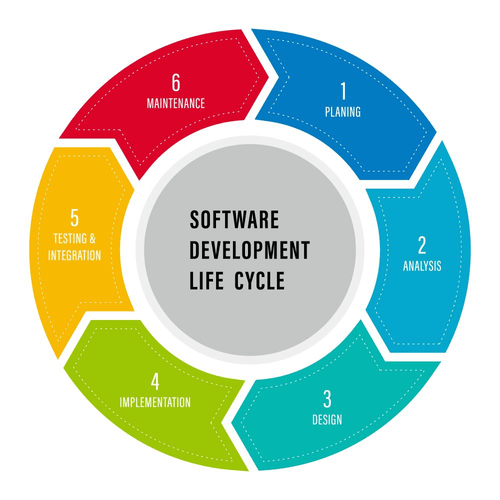
The BA will generate a requirements traceability matrix which becomes the basis for theDesign activity. The discovery of user needs and requirements benefit from techniques like the data flow diagram. As mentioned, they can be created early and give a high-level view of the data flow within a particular process.
Carry out a stakeholder analysis
Data flow diagrams represent the flow of information through a process or a system. It also includes the data inputs and outputs, data stores, and the various https://globalcloudteam.com/glossary/requirements-phase/ subprocess through which the data moves. DFD describes various entities and their relationships with the help of standardized notations and symbols.